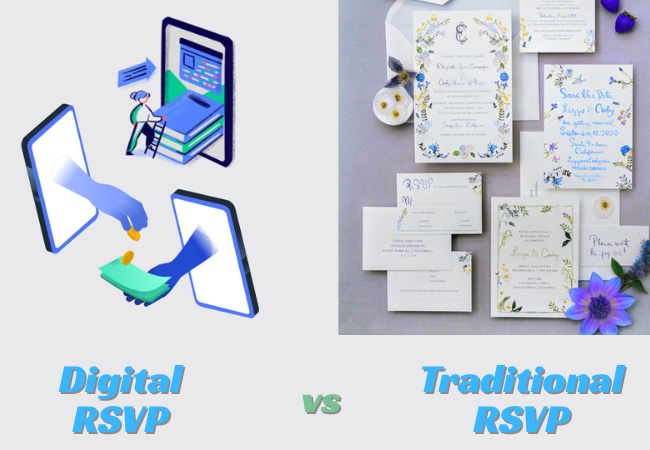
A few years ago, the solution would have been straightforward.
You picked a beautiful invitation suite, tucked an RSVP card inside, mailed everything out, and waited for responses to arrive in your mailbox.
Today, things look very different.
A couple planning a wedding in Toronto might send digital invitations and receive 80% of their guest responses within a week. Meanwhile, another couple hosting a traditional Sikh wedding in Brampton may still prefer elegant wedding cards with RSVP inserts because they feel more personal and meaningful.
So which option is actually better?
In reality, there isn't a single ideal response. The best choice depends on your guests, your wedding style, and how you want the planning experience to feel.
Let's look at both options from a practical wedding planning perspective.
The Rise of Digital RSVP Cards
Digital RSVP cards have become one of the biggest wedding trends in recent years.
Instead of mailing response cards back and forth, guests simply click a link, scan a QR code, or visit a wedding website to confirm their attendance.
Sounds simple, because it is.
One couple we worked with invited around 150 guests across multiple Canadian cities. Using a digital invitation with RSVP, they collected more than half of their responses within five days. With traditional RSVP cards, that same process could've taken weeks.
For busy couples juggling work, family commitments, and wedding planning, that's a huge advantage.
Why Couples Are Choosing Digital Invitations and RSVP
Faster Guest Responses
Let's be honest!
Chasing RSVPs is one of the least exciting parts of wedding planning.
Digital RSVP systems send automatic reminders and make responding incredibly easy. Guests can reply while sitting on their couch, waiting at the airport, or even during their lunch break.
Less follow-up means less stress for the couple.
Easier Guest List Management
Managing a guest list isn't just about counting heads.
You need meal preferences, plus-one information, dietary restrictions, and attendance confirmations for multiple events.
A digital RSVP for party celebrations and weddings keeps everything organised in one place. No spreadsheets scattered everywhere and fewer chances of missing important details.
Lower Costs
Wedding budgets add up quickly.
Printing invitations, RSVP cards, envelopes, postage, and return postage can cost hundreds or even thousands of dollars depending on the guest count.
Digital invitations eliminate many of these expenses, allowing couples to invest their budget elsewhere. Maybe into a better photographer. Maybe into that extra dessert station everyone keeps talking about.
Why Traditional RSVP Cards Still Have a Place
Despite all the convenience of technology, traditional wedding cards continue to hold emotional value. There is something special about opening a beautifully designed envelope and holding an invitation in your hands.
For many families, especially during cultural weddings, traditional cards aren't just invitations. They're part of the celebration itself.
For example if there’s a luxury wedding in Vancouver or a large South Asian wedding in the GTA. Which often uses premium stationery because it reflects the importance of the occasion. And honestly, some moments simply feel better on paper.
What Makes Traditional RSVP Cards Special?
They Create a Lasting Impression
A wedding invitation is often the first glimpse guests get of your celebration. The paper quality, design, typography, and finishing touches all tell a story before the wedding even begins.
Digital invitations can be beautiful, but traditional wedding cards often create a stronger emotional connection.
They're Ideal for Formal Weddings
If you're planning a black-tie event, a luxury ballroom wedding, or a culturally significant ceremony, printed invitations usually match the tone better.
Guests tend to view formal printed invitations as more prestigious and important.
They Become Keepsakes
Long after the wedding is over, many guests still keep special invitations. Grandparents, parents, and close friends often save them for years. A digital RSVP confirmation simply doesn't offer the same experience.
The Real Question: Who Are Your Guests?
This is where many couples make the wrong decision. They choose an RSVP method based on what they like rather than what works best for their guests.
Imagine you're inviting 200 people.
If most guests are younger professionals who regularly use smartphones, a digital RSVP system will probably work perfectly.
But if a large portion of your guest list includes older relatives who aren't comfortable with online forms, traditional RSVP cards may generate better response rates.
Often, a hybrid strategy is the most clever solution. Many couples now send traditional wedding invitations and include a QR code that directs guests to an online RSVP page. Guests can choose whichever method feels easiest.
Everyone wins.
What We're Seeing in Canadian Wedding Planning
Across Canada, couples are increasingly looking for convenience without sacrificing the personal touch.
Instead of replacing traditional cards entirely, they're combining both approaches.
For example:
Printed invitations for immediate family and close relatives.
Digital invitations and RSVP links for friends and colleagues.
QR codes included inside invitation suites.
Wedding websites that simplify RSVP tracking.
This approach gives couples the elegance of traditional cards and the efficiency of digital technology.
It's not about choosing one side anymore. It's about creating a better experience for everyone involved.
So, Which One Should You Choose?
Choose digital RSVP cards if:
You want faster responses.
You're working with a limited budget.
You have guests spread across multiple locations.
You want easier RSVP tracking and guest management.
Choose traditional RSVP cards if:
Your wedding is highly formal.
Printed stationery is important to your vision.
You value keepsakes and presentation.
Many guests prefer traditional communication
Or do what many modern couples are already doing.
Use both.
The best wedding planning decisions aren't always about following trends. They're about making life easier for your guests while creating an experience that feels true to your celebration.
Additionally, there are instances when the ideal solution lies in the middle between tradition and technology.
Final Thoughts
Digital RSVP cards have changed the way couples manage weddings, and there's no denying the convenience they offer.
At the same time, traditional wedding cards continue to deliver something technology can't fully replace, a tangible, personal connection.
The best choice isn't necessarily the newest option. It's the one that works for your wedding, your guests, and the experience you want to create.
Because at the end of the day, the goal isn't collecting RSVPs.
It's bringing people together to celebrate one of the most important days of your life.